
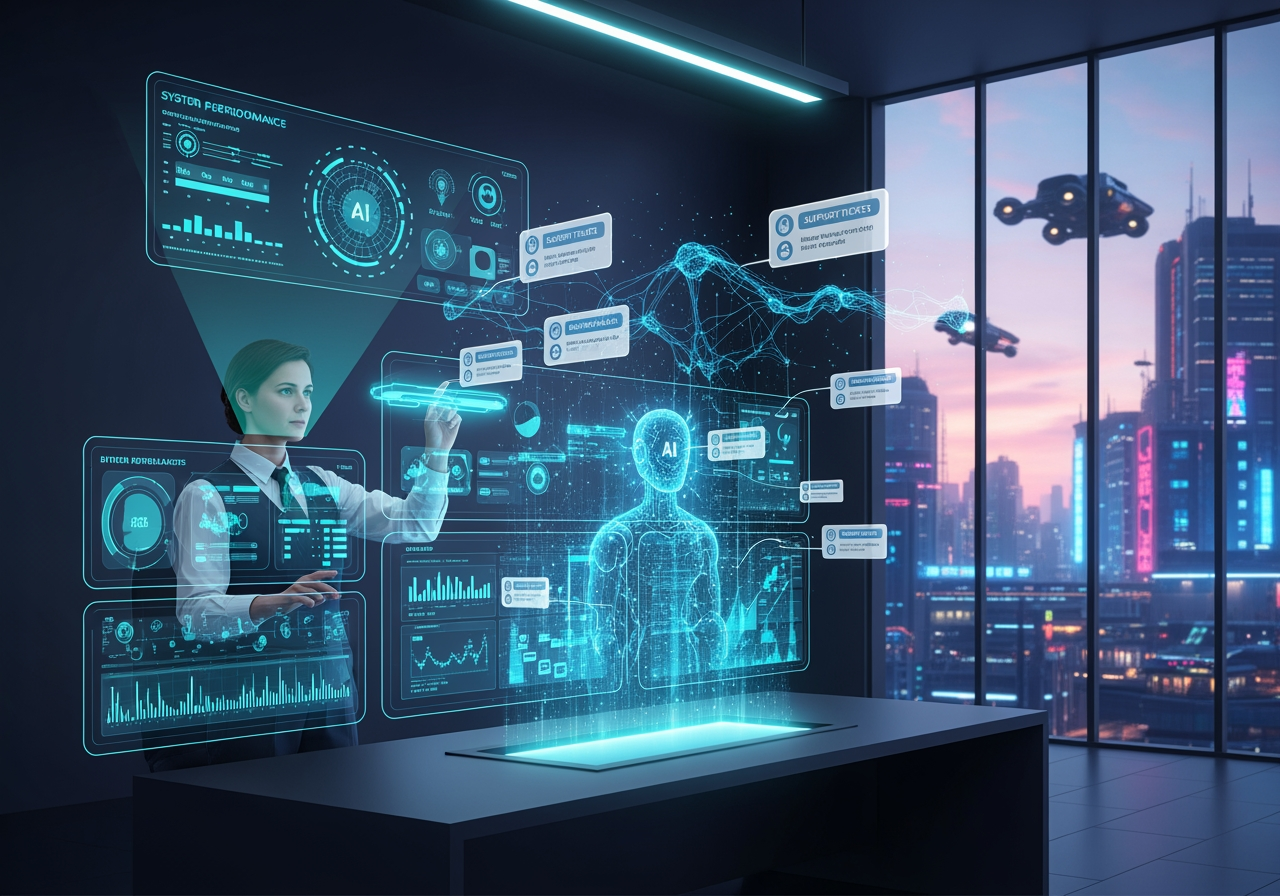
Artificial Intelligence is rapidly transforming IT operations, and by 2026, IT support roles are among the most affected. From automated troubleshooting to AI-powered helpdesks, many traditional IT support tasks are now handled faster and more accurately by machines.
While this shift raises concerns about job loss, it also opens new opportunities for IT professionals willing to adapt.
How AI Is Replacing IT Support Roles in 2026
AI in 2026 has moved far beyond basic chatbots. Modern AI-driven IT systems can:
- Automatically resolve common hardware and software issues
- Provide 24/7 AI helpdesk support
- Diagnose network and system failures in real time
- Predict outages before they occur
- Reset passwords and manage access controls automatically
These capabilities significantly reduce the need for Level 1 and Level 2 IT support roles, which traditionally handled repetitive and rule-based tasks.
Which IT Support Jobs Are Most at Risk?
AI primarily impacts roles that involve routine troubleshooting and predefined workflows, such as:
- Helpdesk and service desk technicians
- Password and access management support
- Basic system monitoring roles
- Manual ticket routing and escalation
In many organizations, a single AI system can now handle thousands of tickets simultaneously, something impossible for human teams.
Why AI Cannot Fully Replace IT Support Professionals
Despite its power, AI still has limitations. It struggles with:
- Complex, non-standard problems
- Business-critical incidents requiring judgment
- Security-sensitive decisions
- User communication during high-stress outages
- Accountability and responsibility
This means human expertise remains essential, especially in higher-level support and strategic IT roles.
How to Overcome Job Loss in IT Support
The key to surviving AI-driven disruption is skill transformation.
1. Move Up the Support Stack
Instead of basic support, focus on:
- Level 3 and escalation handling
- Root cause analysis
- Infrastructure troubleshooting
Higher-level problem-solving is harder to automate.
2. Learn AI and Automation Tools
IT professionals who understand AI systems are less likely to be replaced. Learn:
- IT automation platforms
- AI-driven monitoring tools
- Prompting and supervising AI helpdesk systems
Those who manage AI will always be needed.
3. Shift Toward Cybersecurity and Cloud Operations
AI cannot fully handle security and compliance risks. Growing areas include:
- Cybersecurity operations
- Cloud infrastructure management
- Identity and access governance
- Incident response planning
These roles require human judgment and accountability.
4. Strengthen Communication and Business Skills
IT support is not just technical—it’s human-facing. Skills like:
- User empathy
- Clear communication
- Crisis management
make professionals valuable in situations AI cannot handle well.
5. Commit to Continuous Learning
Technology changes fast. In 2026, staying relevant means:
- Regular upskilling
- Certifications in cloud, security, or automation
- Understanding emerging AI capabilities
Adaptability is now a core job requirement.
The New Role of IT Support in 2026
In the AI era, IT support professionals are evolving into:
- System reliability engineers
- AI operations supervisors
- Security and compliance specialists
- IT strategy partners
Instead of fixing small issues, humans focus on preventing large failures.
Conclusion
AI is undeniably reducing traditional IT support jobs in 2026, especially entry-level and repetitive roles. However, it is not eliminating the profession—it is redefining it.
IT professionals who upskill, specialize, and embrace AI as a tool rather than a threat will remain in demand.
AI won’t replace IT support entirely — but IT support that ignores AI will struggle to survive.