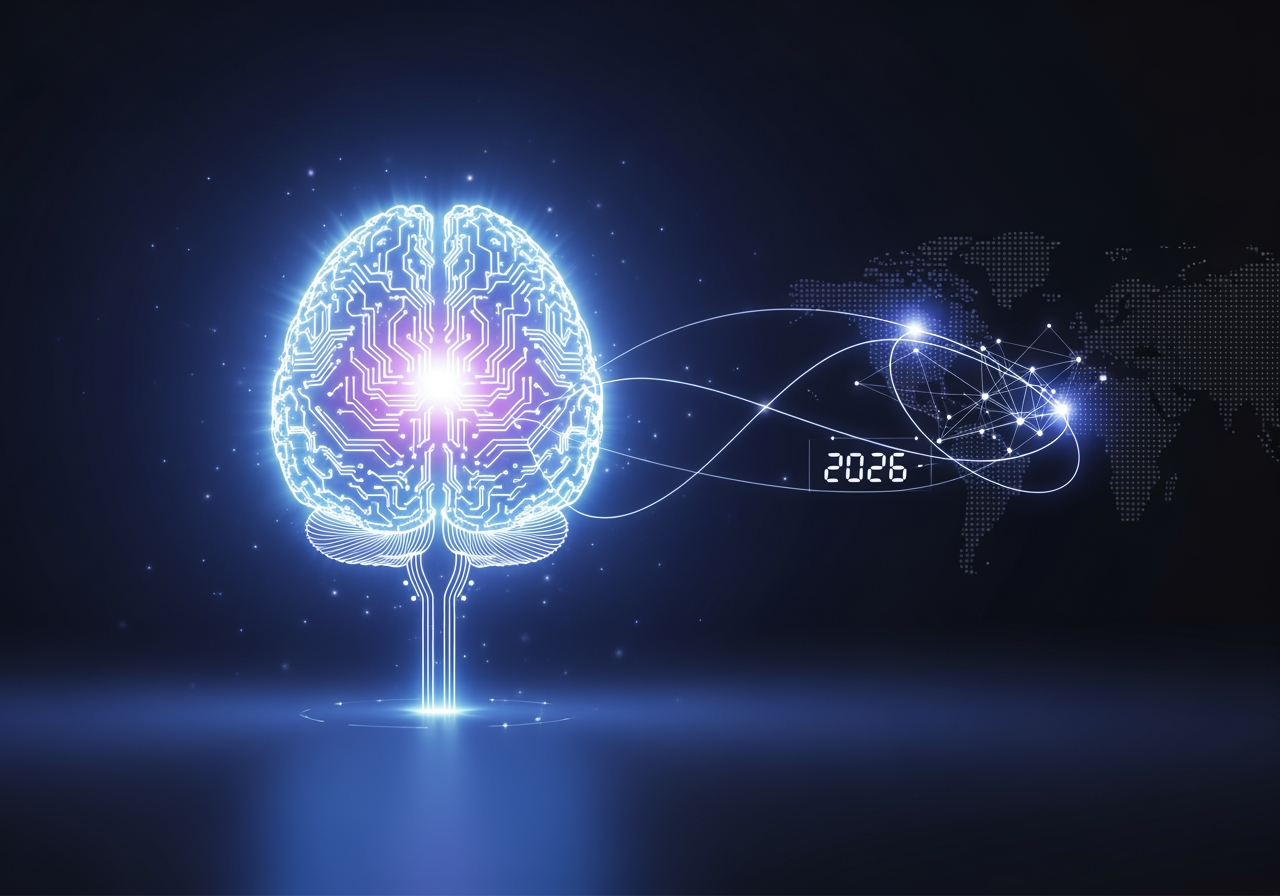
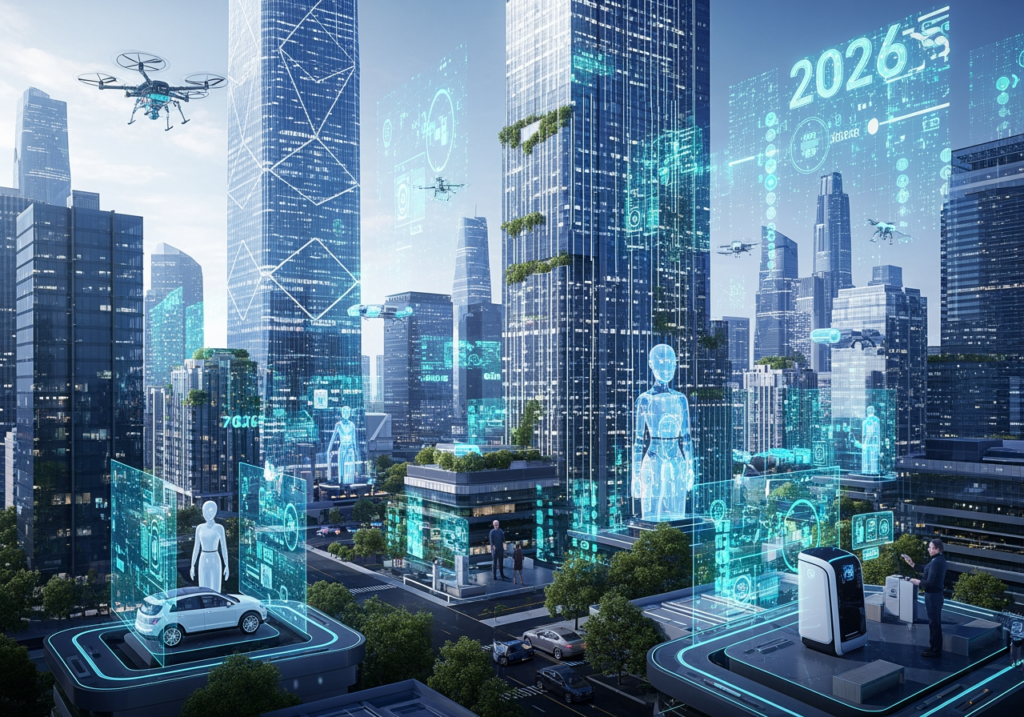
The year 2026 marks a defining chapter in the evolution of Artificial Intelligence. What once served as a supportive tool has now matured into a semi-autonomous decision-maker, reshaping industries, redefining jobs, and raising important ethical conversations.
From enterprise automation to personal AI agents, 2026 is the year AI moved from assistance to action.
1. Rise of Autonomous AI Agents
One of the biggest AI breakthroughs in 2026 is the widespread adoption of autonomous AI agents. These systems no longer wait for instructions; instead, they:
- Plan multi-step tasks
- Make real-time decisions
- Collaborate with other AI agents
- Learn continuously from outcomes
Businesses are deploying AI agents to manage operations, customer interactions, logistics, and even negotiations with minimal human oversight.
2. AI and the Future of Work
AI in 2026 is not just replacing repetitive tasks—it’s reshaping roles.
Key trends:
- AI copilots embedded into almost every profession
- New roles like AI Supervisor, Model Auditor, and Prompt Architect
- Human-AI collaboration becoming the norm
Rather than eliminating jobs, AI is transforming how work is done, demanding creativity, oversight, and strategic thinking from humans.
3. Multimodal AI Becomes Standard
Text-only AI is now outdated. In 2026, multimodal AI systems seamlessly process:
- Text
- Images
- Video
- Audio
- Real-time sensor data
This allows AI to understand context far more deeply—powering applications like smart surveillance, advanced medical diagnostics, and immersive virtual assistants.
4. AI Regulation and Ethics Take Center Stage
With increased power comes increased responsibility. Governments and global organizations in 2026 are enforcing:
- Mandatory AI transparency disclosures
- Bias and fairness audits
- Clear accountability for AI decisions
Ethical AI is no longer optional—it’s a legal and social requirement.
5. Generative AI Goes Enterprise-Grade
Generative AI in 2026 has moved far beyond basic content creation. Enterprises now use it for:
- Software development and code refactoring
- Automated design and prototyping
- Legal drafting and compliance checks
- Marketing personalization at scale
Accuracy, explainability, and security have become as important as creativity.
6. AI in Healthcare and Science
Healthcare has seen some of the most impactful AI advancements in 2026:
- AI-assisted diagnostics outperforming human averages
- Drug discovery timelines reduced dramatically
- Personalized treatment plans driven by predictive AI models
AI is no longer just supporting doctors—it’s becoming a core medical partner.
7. Personal AI Assistants Become Digital Companions
Personal AI assistants in 2026 understand user preferences, habits, emotions, and goals. These assistants:
- Manage schedules proactively
- Offer mental health support
- Learn communication styles
- Operate across devices seamlessly
AI is no longer an app—it’s an ecosystem companion.
Final Thoughts
The AI news of 2026 tells a clear story:
Artificial Intelligence has transitioned from experimental technology to foundational infrastructure.
As AI systems grow more autonomous and intelligent, the focus shifts from what AI can do to how responsibly we guide it. The future belongs to those who embrace AI not just as a tool, but as a collaborator.
2026 isn’t the year AI arrived—it’s the year AI stayed.