Microsoft is entering 2026 with a bold lineup of new products and technologies that reflect its deep commitment to artificial intelligence, developer tools, and productivity enhancements. After years of evolution around cloud, AI, and hybrid work solutions, 2026 looks set to be a pivotal year for Microsoft’s product ecosystem. Microsoft+2Technobezz+2
In this article, we’ll explore the most exciting upcoming launches and previews that are shaping Microsoft’s future—and what they mean for users, developers, and businesses worldwide.
1. AI Agents Framework in Windows 11
One of the headline announcements as 2026 begins is Microsoft’s preview of a new “Agent Launchers” framework for Windows 11. This system allows developers to register AI agents directly within the operating system, letting them integrate into the taskbar, Microsoft Copilot, and other parts of the Windows interface. Technobezz
What makes this noteworthy:
- AI agents can live alongside users, automating tasks with contextual awareness.
- They can interact with native apps and system workflows.
- Third-party developers can build their own specialized AI assistants that behave like first-class Windows features.
This move signals Microsoft’s intent to make AI an inherent part of everyday computing, not just a separate add-on or app.
2. Expanded Microsoft 365 with AI Deep Integration
Microsoft 365, the cloud productivity suite used by hundreds of millions globally, is also getting a significant upgrade in 2026. The focus is on embedding AI, security, and management capabilities across the platform—not merely as previews, but as mainstream features. This includes deeper Copilot integration that spans Word, Excel, Outlook, Teams, and beyond. Microsoft
Key benefits for users:
- Context-aware assistant features in everyday productivity apps
- Advanced security and compliance automation
- AI-driven task and project support inside Teams channels and group workflows
These enhancements aim to transform Microsoft 365 from a toolset into a AI-powered work ecosystem.
3. Windows 12 and the Next Generation of OS Innovation
Rumors and roadmap indicators suggest that Windows 12 (expected around late 2025 into early 2026) will center on a redesigned interface and AI-centric features. These may include:
- Deep Copilot assistance across all system operations
- Context-aware recommendations and adaptive layouts
- Local and cloud-enhanced security systems
- Seamless cross-device experiences with Surface hardware
According to projections, this version will push personalized, predictive computing beyond anything seen in Windows 11. DigitaLicence
4. Surface Hardware Upgrades for AI-First Work
Microsoft’s Surface lineup—always a showcase of Windows hardware—may undergo a major refresh with AI-optimized components and deeper Copilot experiences. Rumors point toward:
- Enhanced Surface Pro and Surface Laptop models
- Local AI processing via Neural Processing Units (NPUs)
- Snapdragon X2 and new Intel platforms designed for real-time AI tasks
- Better battery life and performance tailored for AI workloads
These advancements mean devices will not just run AI—they will perform AI tasks natively without heavy reliance on cloud processing. DigitaLicence
5. Copilot Expands Across Apps and Workflows
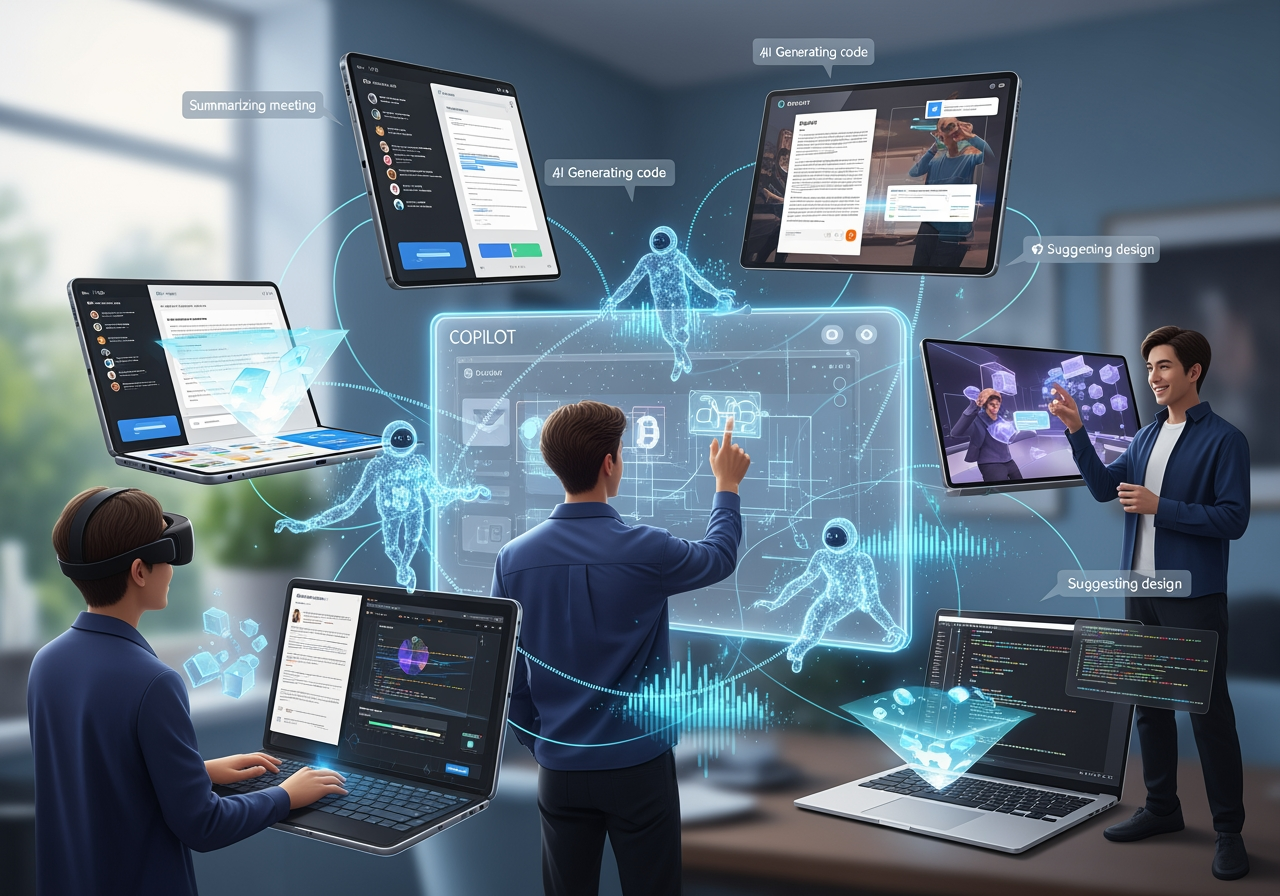
Copilot, Microsoft’s flagship AI assistant, is evolving from a supplementary tool to a central element of the company’s strategy. Beyond just answering questions, Copilot is being embedded into multi-step workflows, team collaboration, and task automation. Microsoft
Examples:
- Copilot Catalog for automated project support
- Teams Copilot agents that can take notes, manage agendas, and streamline meetings
- Integrated AI workflows spanning Microsoft 365 and third-party apps
This transforms Copilot from a feature into a productivity partner.
6. A Major Focus on AI Infrastructure and Developer Tools
Behind the consumer-facing releases, Microsoft is doubling down on pulling AI into the enterprise and developer ecosystem. Investments into cloud AI infrastructure, expanded Azure AI services, and tight integration with platforms like Power BI and Microsoft Fabric are part of this push. These changes will help organizations build, deploy, and scale AI solutions at enterprise scope.
Why 2026 Matters for Microsoft
According to CEO Satya Nadella, 2026 is expected to be the year AI shifts from discovery to diffusion—meaning AI’s impact moves from experimental phases into massive real-world application across industries. The Economic Times
In simple terms:
- Microsoft wants AI to be everywhere on every device and every workflow.
- From consumer PCs to cloud data centers, AI is becoming the core logic layer of computing.
- Developers and enterprises will have more tools to build intelligent apps without starting from scratch.
This strategy positions Microsoft not just as a software maker, but as a platform for the next era of AI-powered computing.
What to Watch Next
As 2026 unfolds, some areas to keep an eye on include:
- Windows 12 official launch and feature rollout
- Copilot’s expansion into real-time collaboration and business automation
- New Surface devices featuring AI-enabled hardware
- Third-party AI agent ecosystems building within Windows
- Enterprise adoption of AI tools across Azure and Microsoft 365
Each of these reflects a broader trend: software is no longer static—it’s responsive, intelligent, and adaptive.