Apple is preparing a major shift in its artificial intelligence strategy, and at the center of it is Next-Gen Siri. After years of incremental improvements, 2026 is shaping up to be the year when Siri finally transforms from a basic voice assistant into a truly intelligent, context-aware AI companion.
This move signals Apple’s broader commitment to AI—not as a standalone feature, but as a deeply integrated part of its ecosystem.
Why Siri Needed a Major Upgrade
For a long time, Siri lagged behind competitors in conversational ability, contextual understanding, and task complexity. While rivals focused on large language models and generative AI, Siri remained limited to predefined commands and basic automation.
Apple recognized that to stay competitive, Siri needed:
- Deeper contextual understanding
- More natural conversations
- Ability to perform complex, multi-step tasks
- Strong privacy-first AI architecture
Next-Gen Siri is Apple’s answer to these challenges.
What Makes Next-Gen Siri Different?
The new version of Siri is expected to be powered by advanced AI and large language models, allowing it to understand not just commands, but intent.
Key improvements include:
1. Conversational Intelligence
Next-Gen Siri will support more natural, flowing conversations. Users will be able to ask follow-up questions without repeating context, making interactions feel more human and less robotic.
2. Context-Aware Assistance
Siri will understand what users are doing on their device and respond accordingly. For example, it can:
- Help summarize emails you’re reading
- Suggest actions based on calendar events
- Assist with tasks across multiple apps
This turns Siri into a proactive assistant rather than a reactive one.
3. Deeper App Integration
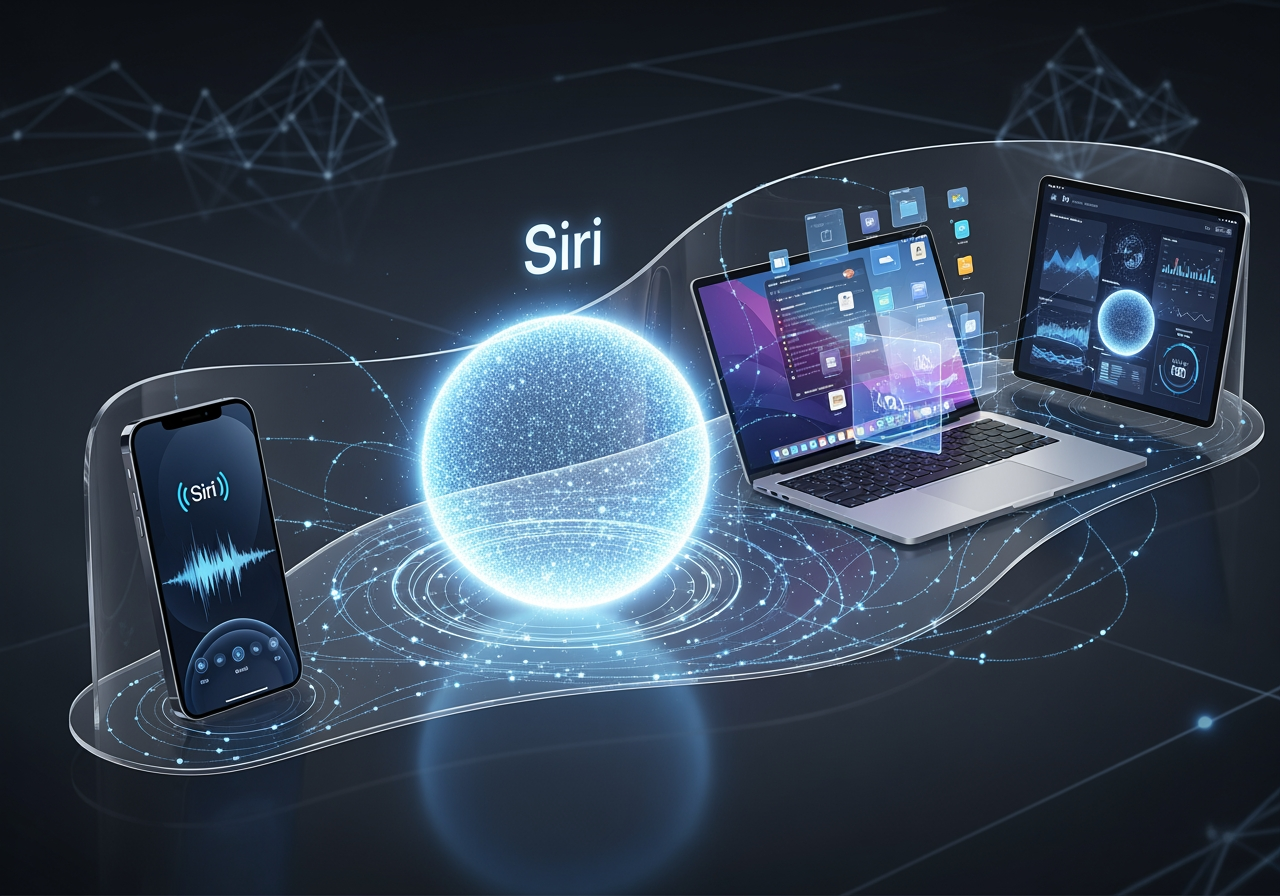
Apple is focusing on system-level AI. Siri will work seamlessly across:
- iOS
- macOS
- iPadOS
- watchOS
This allows users to perform complex actions like planning trips, managing work tasks, or organizing files using voice or text commands.
Apple’s Privacy-First AI Approach
One of Apple’s biggest differentiators is privacy. Unlike many AI platforms that rely heavily on cloud processing, Apple aims to run as much AI as possible on-device.
Benefits of this approach:
- Improved data security
- Faster responses
- Reduced dependency on internet connectivity
- Greater user trust
Apple’s AI strategy prioritizes user data protection while still delivering intelligent features.
AI Across the Apple Ecosystem
Next-Gen Siri is not an isolated upgrade—it’s part of Apple’s wider AI push. In 2026, AI will influence:
- Smart photo and video editing
- Writing assistance across apps
- Intelligent notifications and summaries
- Improved accessibility features
AI will quietly enhance everyday experiences without overwhelming users.
Impact on Users and Developers
For Users
- Faster, smarter assistance
- Less manual navigation
- Improved productivity
- More personalized device experience
For Developers
Apple is expected to provide tools that allow developers to:
- Integrate AI-driven features into apps
- Use Siri for deeper automation
- Build intelligent workflows within Apple’s ecosystem
This opens new opportunities for app innovation.
Challenges Apple Must Overcome
Despite the promise, Apple faces challenges:
- Catching up to competitors in generative AI
- Balancing innovation with strict privacy standards
- Ensuring accuracy and reliability
- Avoiding AI hallucinations or misinformation
How Apple addresses these issues will define the success of Next-Gen Siri.
Why 2026 Is a Turning Point for Apple AI
2026 represents a shift from experimental AI features to full-scale adoption. Apple is moving toward a future where AI is:
- Invisible but powerful
- Helpful but controlled
- Intelligent but private
Next-Gen Siri symbolizes this transition.
Conclusion
Next-Gen Siri marks a major milestone in Apple’s AI journey. By combining advanced intelligence with privacy-first design, Apple is positioning Siri as a trusted digital assistant for the AI era.
Rather than chasing hype, Apple is focusing on useful, responsible, and deeply integrated AI—and 2026 may finally be the year Siri reaches its true potential.