For many people, Nokia is the name synonymous with mobile phones — indestructible handsets that ruled the world in the late 1990s and early 2000s. But over the past decade, the company that once dominated mobile handsets lost its place in the consumer phone market, eventually shifting its focus toward telecommunications infrastructure and advanced networking technologies. ET Now Swadesh
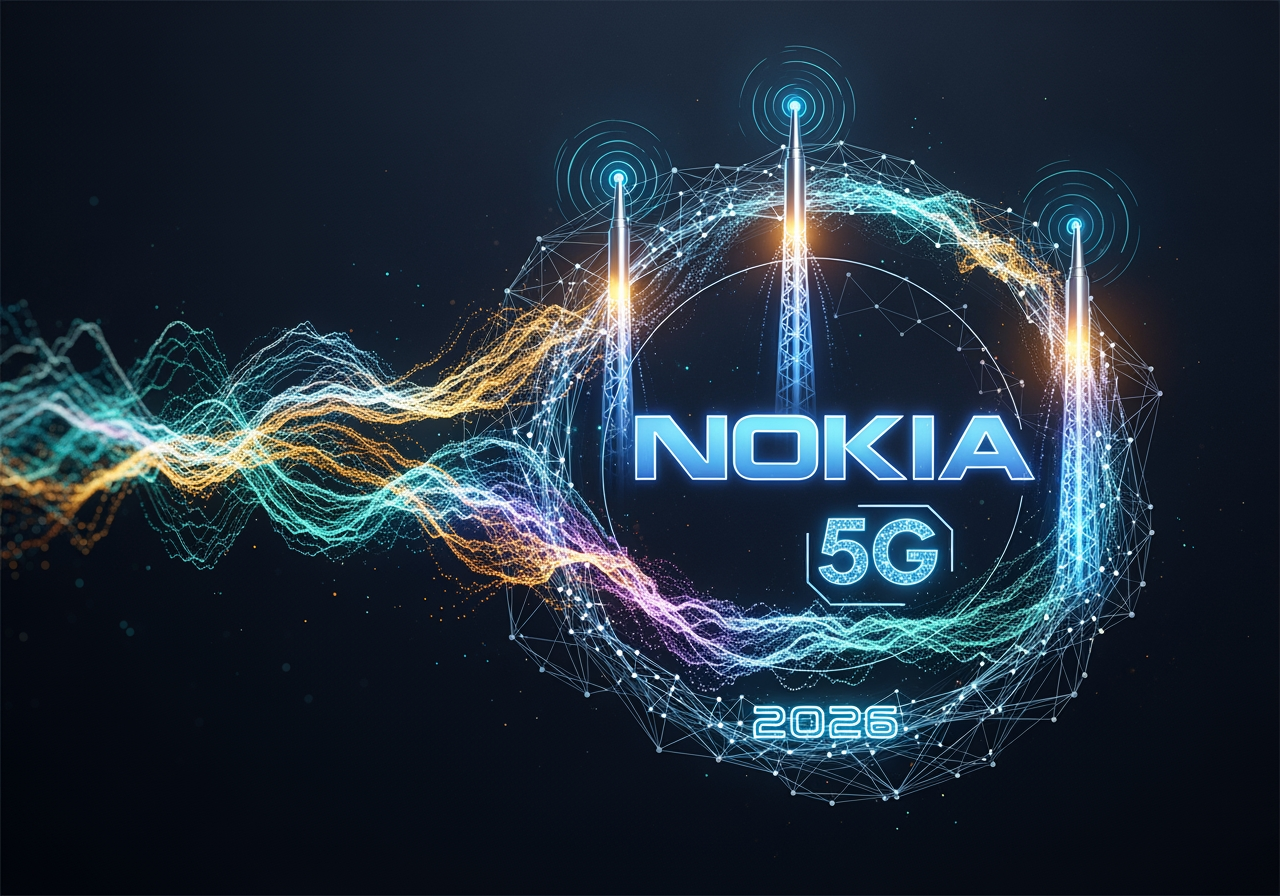
Now in 2026, Nokia is not disappearing — it’s transforming itself for a new era of connectivity, cloud services, and artificial intelligence (AI)-driven networks.
From Mobile Leader to Network Specialist
Nokia’s decline as a consumer phone maker began after the rise of smartphones dominated by Apple and Android platforms. Once the world’s biggest mobile phone maker, Nokia’s handset business gradually lost relevance as the market moved to touch-based smartphones with ecosystems. ET Now Swadesh
Although the company’s name still appears on some feature phones in markets like India thanks to partnerships, its core business today is very different.
A New Strategic Focus for 2026
Redesigned Operating Model
Starting January 1, 2026, Nokia reorganized its operations into two main segments:
- Network Infrastructure (NI) — focusing on telecom and data-center networking, including optical and IP network technologies
- Mobile Infrastructure — combining core networks, radio technologies, and standards work in telecommunications TelecomTV
This restructuring is designed to simplify the business, make it more responsive to market needs, and focus investments on areas with stronger growth potential as 5G matures and 6G emerges.
New Financial and Performance Targets
Under the new strategy, Nokia has updated its long-term targets. The company aims to increase annual operating profit significantly by 2028, and it expects to grow net sales steadily through 2028 by focusing on its core connectivity solutions. Nasdaq
Nokia Is Betting Big on AI-Ready Networks
Unlike its old consumer phone identity, Nokia is now positioning itself as a key player in the AI supercycle — the global shift toward AI-driven data centers and networks. The company has committed to large investments aimed at accelerating innovation with AI-optimized connectivity technology:
- A $4 billion investment in the United States focused on AI-ready network technologies and manufacturing
- Major R&D efforts for future-proofing optical, IP, and data-center networking solutions
- Partnerships with cloud providers and hyperscalers on AI infrastructure technology ETTelecom.com
In late 2025, Nvidia — a leading AI hardware and chip company — bought about ~2.9% of Nokia for $1 billion, signaling confidence in Nokia’s role in future connectivity and AI workloads. This deal also promises collaboration on next generation 5G/6G networking and data center technologies. Financial Express
Key Deals and Industry Partnerships
Nokia is not just restructuring internally — it’s also securing long-term contracts with telecom operators. For example, Nokia signed a multi-year deal with Telefonica Germany to modernize the radio access network using advanced 5G technology. Such deals help solidify its presence in European telecom infrastructure and position it for future technology upgrades. GuruFocus
These partnerships show that while Nokia is no longer the handset king, it remains a trusted provider of infrastructure technology that keeps networks running and evolving.
Workforce and Efficiency Changes
Like many legacy technology companies, Nokia has had to restructure its workforce to stay agile and cost-efficient:
- Job reductions and site closures are part of broader cost-optimization plans
- By 2026, some facilities, including its Munich site, are being closed or restructured to strengthen the company’s long-term position in core technology areas rather than supporting outdated operations. Total Telecom
These decisions are painful but aimed at aligning Nokia’s resources with future growth opportunities.
What Happens in 2026
In 2026, Nokia continues the implementation of its new strategy:
- The 2025 financial results and annual reports will be reviewed and published early in 2026, providing clarity on progress
- Quarterly financial results throughout 2026 will reflect the new two-segment business model
- Continued evaluation of non-core business units will determine whether Nokia divests certain portfolios or reinvests in strategic areas Nokia Corporation | Nokia
What About the Nokia Brand and Phones?
While the core Nokia company no longer focuses primarily on handsets, the brand still lives on through partners:
- Nokia extended its licensing agreement with HMD Global for feature phones, meaning classic Nokia branded phones will continue to be sold in markets like India and China. ETTelecom.com
This ensures Nokia’s iconic name continues to appear on devices even while the company itself focuses on infrastructure.
Final Thoughts
So what happened to Nokia? It’s not gone — it has evolved. Once a phone industry giant, Nokia shifted toward network technology, building the backbone of global communications. Now, it is doubling down on AI-ready networks, cloud infrastructure, and future connectivity like 6G.
By restructuring its business, securing strategic investments, and focusing on its strengths, Nokia aims to remain relevant and competitive in a rapidly changing technological landscape — not as a handset maker, but as a connectivity pioneer for the AI era.